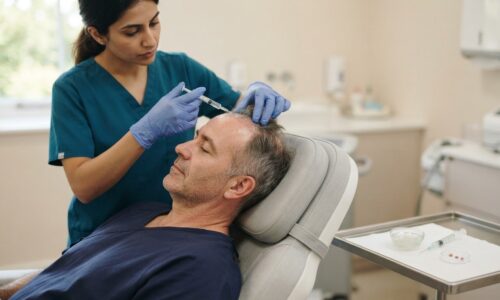
RF skin tightening uses controlled heat beneath the skin to encourage collagen remodelling and support facial firmness. With RF skin tightening, early changes may appear within 1 to 2 weeks, while fuller results can take 3 to 6 months to develop.
Before considering RF skin tightening, it’s natural to want to understand the process and likely timeline. This guide explains how it works on facial skin, what can influence results, and how to assess suitability and ongoing care.
Radiofrequency (RF) skin tightening is a non-surgical procedure that warms deeper skin tissue, supporting collagen production and a firmer appearance. Suitability depends on facial concerns and a practitioner’s assessment.
There is no single UK average cost: price depends on the treatment area, device and plan, and is given after a quote request.
Skin laxity is a loss of firmness that can make facial contours look less defined. RF may be considered for laxity, wrinkles and fine lines. It aims to support skin firmness, not remove excess skin or reproduce a surgical lift.
During an assessment, a practitioner considers the areas you want to address and the degree of laxity. This helps determine whether RF suits your aims or whether another approach may be more appropriate.
RF energy creates controlled heat in tissue beneath the skin’s surface. This may encourage existing collagen fibres to contract and stimulate new collagen production, supporting gradual changes in firmness.
Tell the practitioner if you’re pregnant, have metal implants, an active skin infection or skin disease, or are receiving other skin treatments. Morpheus8 uses RF with microneedling, which delivers energy beneath the skin through fine needles; laser treatments use light energy instead. These methods differ, so assessment considers the treatment area and concern. It may also consider HIFU skin tightening as another approach, depending on your aims.
The ideal dermal target temperature for radio-frequency treatment to induce remodeling and reduce wrinkles and skin laxity is 67 °C. Improper application may cause surface dents due to uneven healing.
Early changes may appear within 1 to 2 weeks, while fuller facial results can take 3 to 6 months. With proper skin care, effects of RF skin tightening may last 1 to 3 years, though the timeline differs between individuals.
The duration describes how long visible improvements remain after treatment. Skin condition, ageing and daily care can all affect how long the appearance of greater firmness lasts, so this can help you plan realistically.
Collagen remodelling continues after the appointment, so an early change may not show the full outcome. Full results from facial RF skin tightening are best seen after 3 to 6 months. Assessing the skin before this gradual process has developed may give an incomplete picture.
Maintenance means reviewing changes over time and considering another appointment if it suits your goals. Some patients schedule maintenance treatments every 12 to 18 months, but timing depends on the individual’s response and desired outcome.
Consistent skin care supports the longer-term appearance of treated skin. Mild redness, tingling or swelling usually resolves within 24 hours; collagen changes take longer to develop. A review can help you discuss how your skin has responded and whether further RF skin tightening fits your plans.
To discuss a personalised treatment timeline, book an appointment with Vie Aesthetics.
Changes in skin tone and appearance after RF skin tightening may become visible within two to six months. A single treatment may not lead to significant visible improvements for every person. These outcomes describe visible skin changes and offer a point of reference when considering treatment response.
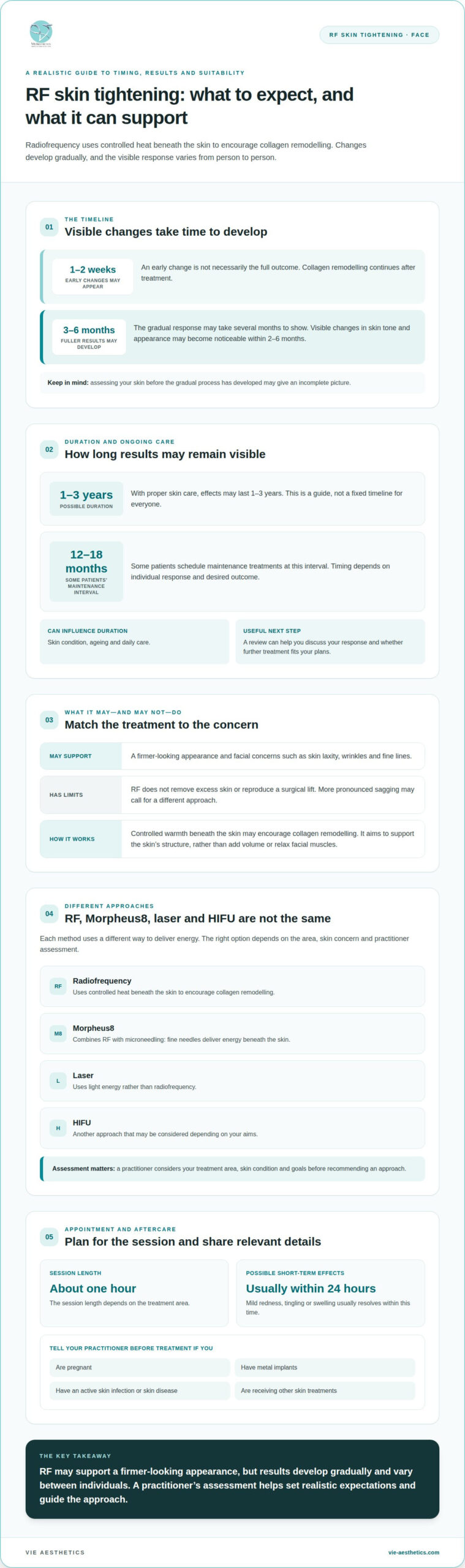
For facial treatment, radiofrequency sends energy beneath the skin’s surface, creating controlled warmth in tissue. This process can stimulate collagen formation, which supports the skin’s structure.
Radiofrequency energy warms the dermis, the supportive layer beneath the skin’s surface. This can prompt collagen production, helping explain how RF skin tightening may support facial firmness over time.
The aim is to encourage the skin’s own response, rather than add volume or relax facial muscles. The practitioner focuses energy on selected areas, guided by the pattern of laxity and your treatment goals.
Collagen remodelling describes how existing collagen responds to controlled heat as new collagen forms. These tissue changes can gradually influence the appearance of facial firmness.
The device is used across the planned area, delivering energy in a controlled way. The skin’s response continues after the session, so the warmth felt during treatment does not reflect the final appearance.
Collagen provides structural support beneath the skin. As it remodels, RF skin tightening may contribute to a firmer-looking appearance, rather than physically pulling tissue into a new position.
Collagen formation takes time, and the visible response varies between individuals. The degree of laxity and the treatment approach influence what changes may develop.
Skin laxity means reduced firmness. Collagen stimulation may help address mild changes, but it does not remove excess skin or create a surgical lift.
More pronounced sagging may call for a different approach to meet your goals, such as surgical lifting. For patients comparing non-invasive treatments with surgical options, resources from facial plastic surgery practices such as aaronfletchermd.com provide useful insight into when surgery may be more appropriate. A practitioner considers the treatment area and skin condition when assessing whether radiofrequency is suitable. This helps set realistic expectations before treatment.
A radiofrequency device delivers energy into tissue beneath the skin’s surface. Controlled heating is key: energy reaches the dermal layer, where it can prompt collagen remodelling without surgery or injections.
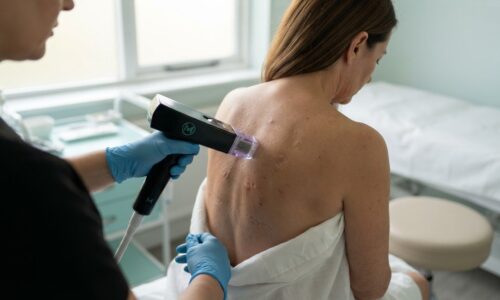
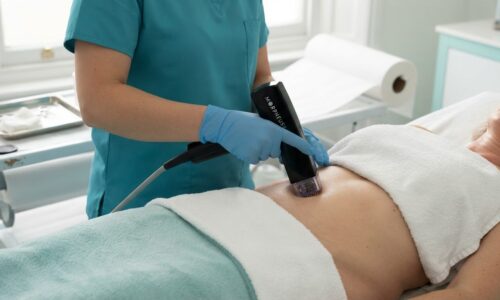
For a facial procedure, the practitioner assesses the treatment area and selects an approach suited to your skin and concern. The device is applied to the planned area, delivering radiofrequency energy as the practitioner works across the skin. A session takes about one hour, depending on the treatment area.
Device design affects how energy reaches tissue. Earlier monopolar RF technology primarily delivered energy at a single depth. Other radiofrequency approaches differ in how they deliver energy, so the device and treatment plan matter when addressing fine lines or mild facial sagging. RF microneedling is a distinct method: insulated needles carry energy beneath the skin, rather than delivering it only through an external applicator.
Heat stimulates collagen contraction and can encourage new collagen production. This response develops over time, so the warmth during treatment is not the final aesthetic result. Full facial results can take up to six months as collagen forms; early changes and the degree of firmness vary between individuals.
RF is non-invasive, meaning it does not require surgical incisions. The sensation during treatment should remain tolerable. Tell the practitioner if you experience uncomfortable burning so they can respond appropriately. Before treatment, discuss precautions such as pregnancy, metal implants and active skin infections, as these may make radiofrequency unsuitable.
RF skin tightening is often described in simple terms, but the device, treatment depth and individual skin concerns all matter. Understanding these differences helps set realistic expectations before a procedure.
Myth: It works like surgery. Reality: Radiofrequency is non-invasive, meaning it does not involve surgical incisions. It uses controlled heat to support collagen remodelling, rather than removing excess skin or changing facial structure. For pronounced sagging, this approach is less effective than for early signs of laxity.
Myth: Every RF device works in the same way. Reality: Device technologies differ. Earlier monopolar systems primarily delivered energy at a single depth, while RF microneedling carries energy beneath the skin through needles. These methods are not interchangeable, so the treatment approach should reflect the area and concern being assessed.
Myth: Results appear as soon as the appointment ends. Reality: The warmth felt during treatment is not the final outcome. Collagen remodelling takes time, and facial results can develop over several months. A practitioner can explain the expected timeline and whether the planned approach matches your goals.
Myth: RF treatment has no risks. Reality: Mild redness, tingling or swelling usually settles within 24 hours. Improper application can rarely cause burns or blisters. Tell the practitioner about uncomfortable burning during treatment, and discuss pregnancy, metal implants or active skin infections beforehand, as these affect suitability.
A clear assessment matters more than broad claims about what RF can achieve. The device, treatment area and skin response shape both the plan and realistic expectations.
Radiofrequency treatment is designed to encourage gradual changes in skin firmness. Understanding its scope helps you decide whether it matches your facial goals.
It may support:
Effects depend on factors such as the treatment area, skin condition and response to energy. Results vary between individuals. The aim is a natural-looking change in skin quality, not a dramatic alteration to facial features.
It won’t:
For pronounced sagging, a collagen-stimulating treatment may not provide the degree of lift you want. An assessment considers the location and extent of laxity, your skin’s condition and the outcome you have in mind. This can clarify whether radiofrequency alone is appropriate or whether another approach better matches your priorities.
Recovery expectations also matter. Mild redness, tingling or swelling usually settles within 24 hours, while collagen changes develop over a longer period. Any treatment plan should explain the intended outcome, its limits and the likely timeline in clear terms.
Vie Aesthetics offers ZO SkinHealth and AlumierMD skincare to discuss alongside your facial skin goals. If you’re considering radiofrequency treatment, a medical consultation can help you understand how skincare fits into your wider approach, without treating it as a replacement for the procedure.
Skincare needs vary according to your skin and the concerns you want to address. Discuss what you currently use, what you hope to achieve and whether a skincare option is relevant to your routine, rather than assuming a particular product suits everyone.
A conversation can help you consider:
A treatment plan should reflect your skin, not a general routine. Sharing your current skincare and treatment history gives the practitioner useful context for discussing next steps. If radiofrequency isn’t the right match for your aims, a consultation can still clarify your options and expectations.
ZO SkinHealth and AlumierMD are skincare options at Vie Aesthetics. Their relevance depends on your individual needs and the wider plan discussed with the practitioner. You can take time to understand how an option relates to your goals before deciding on treatment.
If you’re considering RF skin tightening, focus your consultation on the change you’d like to see and what feels appropriate for you. A useful discussion can clarify your priorities, explore suitable approaches and set expectations before you decide whether to proceed.
Vie Aesthetics also offers Endolift Laser Treatment and Soft Surgery (Plexr) for other skin concerns, as well as Aqualyx Fat Dissolving Injections for targeted fat reduction. These treatments have different purposes, so an assessment can help identify which options relate to your goals.
You don’t need a complete treatment plan before starting a conversation. Sharing your concerns and preferences is a practical first step towards making an informed choice.
Take your time, ask what matters to you and choose your next step with confidence.
Temporary redness, tingling or swelling can occur, and mild reactions usually settle within 24 hours. More concerning signs include redness or swelling that continues for several days, or an uncomfortable burning sensation during the procedure. Tell the practitioner about burning straight away; seek advice if a reaction persists. Rarely, incorrect application can cause burns, blisters or dents from uneven healing.
The device’s delivery method shapes where radiofrequency energy reaches the tissue. Earlier monopolar systems primarily delivered energy at one depth, while RF microneedling uses insulated needles to carry energy beneath the skin. These approaches are not interchangeable. The device type and treatment area help determine the plan, so ask which method is used and how it relates to your skin concern.
The practitioner first reviews your treatment area, skin concerns and relevant history. Mention pregnancy, metal implants, active skin infections or skin disease, and any skin treatments you’re receiving, as these details affect suitability. During the procedure, report any uncomfortable burning rather than trying to tolerate it. The practitioner can then respond to your sensation and the area being treated.
Some people notice initial changes within 1 to 2 weeks, but this is not the final assessment point. Facial results can take 3 to 6 months to develop as collagen forms. If you’re tracking changes, use consistent lighting and angles in photographs taken over time. This makes gradual differences easier to compare than relying on memory or day-to-day appearance.
Radiofrequency may be used for facial skin and selected body areas, depending on the device and treatment plan. There is no single area list that applies to every device. The practitioner assesses the specific concern and whether the device is designed for that area. Be clear about the location you want treated during assessment, so suitability and expectations can be discussed before proceeding.
Radiofrequency energy creates controlled warmth in tissue beneath the skin’s surface. Device designs differ: monopolar systems deliver energy at a single depth, while microneedling devices use insulated needles to reach beneath the surface. This distinction helps explain why treatment plans differ. The practitioner considers the device, area and skin concern when planning your session.

RF skin tightening uses controlled heat beneath the skin to encourage collagen remodelling and support facial firmness. With RF skin tightening, early changes may appear within 1 to 2 weeks, while fuller results can take 3 to 6 months to develop.
Before considering RF skin tightening, it’s natural to want to understand the process and likely timeline. This guide explains how it works on facial skin, what can influence results, and how to assess suitability and ongoing care.
Radiofrequency (RF) skin tightening is a non-surgical procedure that warms deeper skin tissue, supporting collagen production and a firmer appearance. Suitability depends on facial concerns and a practitioner’s assessment.
There is no single UK average cost: price depends on the treatment area, device and plan, and is given after a quote request.
Skin laxity is a loss of firmness that can make facial contours look less defined. RF may be considered for laxity, wrinkles and fine lines. It aims to support skin firmness, not remove excess skin or reproduce a surgical lift.
During an assessment, a practitioner considers the areas you want to address and the degree of laxity. This helps determine whether RF suits your aims or whether another approach may be more appropriate.
RF energy creates controlled heat in tissue beneath the skin’s surface. This may encourage existing collagen fibres to contract and stimulate new collagen production, supporting gradual changes in firmness.
Tell the practitioner if you’re pregnant, have metal implants, an active skin infection or skin disease, or are receiving other skin treatments. Morpheus8 uses RF with microneedling, which delivers energy beneath the skin through fine needles; laser treatments use light energy instead. These methods differ, so assessment considers the treatment area and concern. It may also consider HIFU skin tightening as another approach, depending on your aims.
The ideal dermal target temperature for radio-frequency treatment to induce remodeling and reduce wrinkles and skin laxity is 67 °C. Improper application may cause surface dents due to uneven healing.
Early changes may appear within 1 to 2 weeks, while fuller facial results can take 3 to 6 months. With proper skin care, effects of RF skin tightening may last 1 to 3 years, though the timeline differs between individuals.
The duration describes how long visible improvements remain after treatment. Skin condition, ageing and daily care can all affect how long the appearance of greater firmness lasts, so this can help you plan realistically.
Collagen remodelling continues after the appointment, so an early change may not show the full outcome. Full results from facial RF skin tightening are best seen after 3 to 6 months. Assessing the skin before this gradual process has developed may give an incomplete picture.
Maintenance means reviewing changes over time and considering another appointment if it suits your goals. Some patients schedule maintenance treatments every 12 to 18 months, but timing depends on the individual’s response and desired outcome.
Consistent skin care supports the longer-term appearance of treated skin. Mild redness, tingling or swelling usually resolves within 24 hours; collagen changes take longer to develop. A review can help you discuss how your skin has responded and whether further RF skin tightening fits your plans.
To discuss a personalised treatment timeline, book an appointment with Vie Aesthetics.
Changes in skin tone and appearance after RF skin tightening may become visible within two to six months. A single treatment may not lead to significant visible improvements for every person. These outcomes describe visible skin changes and offer a point of reference when considering treatment response.
For facial treatment, radiofrequency sends energy beneath the skin’s surface, creating controlled warmth in tissue. This process can stimulate collagen formation, which supports the skin’s structure.
Radiofrequency energy warms the dermis, the supportive layer beneath the skin’s surface. This can prompt collagen production, helping explain how RF skin tightening may support facial firmness over time.
The aim is to encourage the skin’s own response, rather than add volume or relax facial muscles. The practitioner focuses energy on selected areas, guided by the pattern of laxity and your treatment goals.
Collagen remodelling describes how existing collagen responds to controlled heat as new collagen forms. These tissue changes can gradually influence the appearance of facial firmness.
The device is used across the planned area, delivering energy in a controlled way. The skin’s response continues after the session, so the warmth felt during treatment does not reflect the final appearance.
Collagen provides structural support beneath the skin. As it remodels, RF skin tightening may contribute to a firmer-looking appearance, rather than physically pulling tissue into a new position.
Collagen formation takes time, and the visible response varies between individuals. The degree of laxity and the treatment approach influence what changes may develop.
Skin laxity means reduced firmness. Collagen stimulation may help address mild changes, but it does not remove excess skin or create a surgical lift.
More pronounced sagging may call for a different approach to meet your goals. A practitioner considers the treatment area and skin condition when assessing whether radiofrequency is suitable. This helps set realistic expectations before treatment.
A radiofrequency device delivers energy into tissue beneath the skin’s surface. Controlled heating is key: energy reaches the dermal layer, where it can prompt collagen remodelling without surgery or injections.
For a facial procedure, the practitioner assesses the treatment area and selects an approach suited to your skin and concern. The device is applied to the planned area, delivering radiofrequency energy as the practitioner works across the skin. A session takes about one hour, depending on the treatment area.
Device design affects how energy reaches tissue. Earlier monopolar RF technology primarily delivered energy at a single depth. Other radiofrequency approaches differ in how they deliver energy, so the device and treatment plan matter when addressing fine lines or mild facial sagging. RF microneedling is a distinct method: insulated needles carry energy beneath the skin, rather than delivering it only through an external applicator.
Heat stimulates collagen contraction and can encourage new collagen production. This response develops over time, so the warmth during treatment is not the final aesthetic result. Full facial results can take up to six months as collagen forms; early changes and the degree of firmness vary between individuals.
RF is non-invasive, meaning it does not require surgical incisions. The sensation during treatment should remain tolerable. Tell the practitioner if you experience uncomfortable burning so they can respond appropriately. Before treatment, discuss precautions such as pregnancy, metal implants and active skin infections, as these may make radiofrequency unsuitable.
RF skin tightening is often described in simple terms, but the device, treatment depth and individual skin concerns all matter. Understanding these differences helps set realistic expectations before a procedure.
Myth: It works like surgery. Reality: Radiofrequency is non-invasive, meaning it does not involve surgical incisions. It uses controlled heat to support collagen remodelling, rather than removing excess skin or changing facial structure. For pronounced sagging, this approach is less effective than for early signs of laxity.
Myth: Every RF device works in the same way. Reality: Device technologies differ. Earlier monopolar systems primarily delivered energy at a single depth, while RF microneedling carries energy beneath the skin through needles. These methods are not interchangeable, so the treatment approach should reflect the area and concern being assessed.
Myth: Results appear as soon as the appointment ends. Reality: The warmth felt during treatment is not the final outcome. Collagen remodelling takes time, and facial results can develop over several months. A practitioner can explain the expected timeline and whether the planned approach matches your goals.
Myth: RF treatment has no risks. Reality: Mild redness, tingling or swelling usually settles within 24 hours. Improper application can rarely cause burns or blisters. Tell the practitioner about uncomfortable burning during treatment, and discuss pregnancy, metal implants or active skin infections beforehand, as these affect suitability.
A clear assessment matters more than broad claims about what RF can achieve. The device, treatment area and skin response shape both the plan and realistic expectations.
Radiofrequency treatment is designed to encourage gradual changes in skin firmness. Understanding its scope helps you decide whether it matches your facial goals.
It may support:
Effects depend on factors such as the treatment area, skin condition and response to energy. Results vary between individuals. The aim is a natural-looking change in skin quality, not a dramatic alteration to facial features.
It won’t:
For pronounced sagging, a collagen-stimulating treatment may not provide the degree of lift you want. An assessment considers the location and extent of laxity, your skin’s condition and the outcome you have in mind. This can clarify whether radiofrequency alone is appropriate or whether another approach better matches your priorities.
Recovery expectations also matter. Mild redness, tingling or swelling usually settles within 24 hours, while collagen changes develop over a longer period. Any treatment plan should explain the intended outcome, its limits and the likely timeline in clear terms.
Vie Aesthetics offers ZO SkinHealth and AlumierMD skincare to discuss alongside your facial skin goals. If you’re considering radiofrequency treatment, a medical consultation can help you understand how skincare fits into your wider approach, without treating it as a replacement for the procedure.
Skincare needs vary according to your skin and the concerns you want to address. Discuss what you currently use, what you hope to achieve and whether a skincare option is relevant to your routine, rather than assuming a particular product suits everyone.
A conversation can help you consider:
A treatment plan should reflect your skin, not a general routine. Sharing your current skincare and treatment history gives the practitioner useful context for discussing next steps. If radiofrequency isn’t the right match for your aims, a consultation can still clarify your options and expectations.
ZO SkinHealth and AlumierMD are skincare options at Vie Aesthetics. Their relevance depends on your individual needs and the wider plan discussed with the practitioner. You can take time to understand how an option relates to your goals before deciding on treatment.
If you’re considering RF skin tightening, focus your consultation on the change you’d like to see and what feels appropriate for you. A useful discussion can clarify your priorities, explore suitable approaches and set expectations before you decide whether to proceed.
Vie Aesthetics also offers Endolift Laser Treatment and Soft Surgery (Plexr) for other skin concerns, as well as Aqualyx Fat Dissolving Injections for targeted fat reduction. These treatments have different purposes, so an assessment can help identify which options relate to your goals.
You don’t need a complete treatment plan before starting a conversation. Sharing your concerns and preferences is a practical first step towards making an informed choice.
Take your time, ask what matters to you and choose your next step with confidence.
Temporary redness, tingling or swelling can occur, and mild reactions usually settle within 24 hours. More concerning signs include redness or swelling that continues for several days, or an uncomfortable burning sensation during the procedure. Tell the practitioner about burning straight away; seek advice if a reaction persists. Rarely, incorrect application can cause burns, blisters or dents from uneven healing.
The device’s delivery method shapes where radiofrequency energy reaches the tissue. Earlier monopolar systems primarily delivered energy at one depth, while RF microneedling uses insulated needles to carry energy beneath the skin. These approaches are not interchangeable. The device type and treatment area help determine the plan, so ask which method is used and how it relates to your skin concern.
The practitioner first reviews your treatment area, skin concerns and relevant history. Mention pregnancy, metal implants, active skin infections or skin disease, and any skin treatments you’re receiving, as these details affect suitability. During the procedure, report any uncomfortable burning rather than trying to tolerate it. The practitioner can then respond to your sensation and the area being treated.
Some people notice initial changes within 1 to 2 weeks, but this is not the final assessment point. Facial results can take 3 to 6 months to develop as collagen forms. If you’re tracking changes, use consistent lighting and angles in photographs taken over time. This makes gradual differences easier to compare than relying on memory or day-to-day appearance.
Radiofrequency may be used for facial skin and selected body areas, depending on the device and treatment plan. There is no single area list that applies to every device. The practitioner assesses the specific concern and whether the device is designed for that area. Be clear about the location you want treated during assessment, so suitability and expectations can be discussed before proceeding.
Radiofrequency energy creates controlled warmth in tissue beneath the skin’s surface. Device designs differ: monopolar systems deliver energy at a single depth, while microneedling devices use insulated needles to reach beneath the surface. This distinction helps explain why treatment plans differ. The practitioner considers the device, area and skin concern when planning your session.