By Vie Aesthetics Editorial Team
Radiofrequency microneedling in the UK uses fine needles to deliver radiofrequency energy at selected depths beneath the skin’s surface. It may be considered for uneven texture, fine lines, some acne scars and skin laxity. Understanding how it works and what recovery involves can help you decide whether it suits your goals.
Before choosing a treatment, it helps to know what happens during a session, how your skin may feel afterwards and when changes might become visible. Suitability and results vary, so the right choice depends on your skin concerns, tone, medical history, medicines and healing.
This guide explains the treatment process, the concerns it may address, and what to expect from recovery and results. It also offers practical questions to raise during a consultation, so you can make a decision with informed, realistic expectations.
Radiofrequency microneedling may be considered for uneven texture, fine lines, some acne scars and skin laxity. Fine needles deliver radiofrequency energy at selected depths, supporting collagen remodelling, the skin’s gradual renewal of structural support. Treatment is planned around the concern and area, rather than using identical settings for every face.
If you’re concerned about established acne scars, for example, you can discuss whether the treatment suits your skin. Fine lines and uneven texture may also be treatment goals. Active acne differs from acne scarring, so describe your concern clearly during consultation. The practitioner can then explain the treatment aims and whether this approach is suitable.
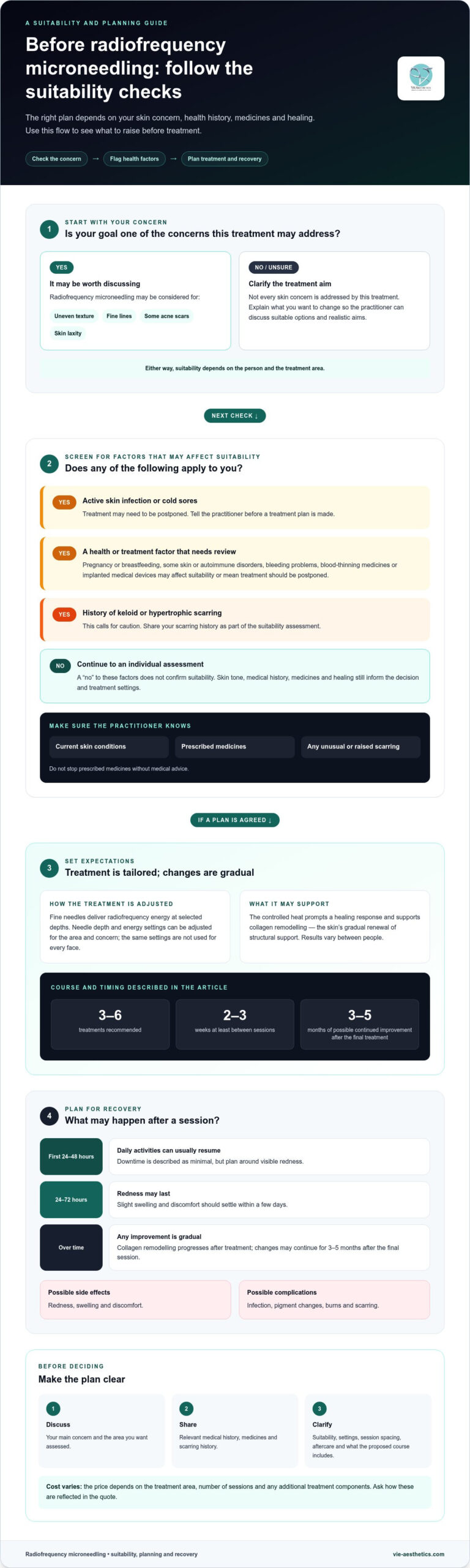
Suitability is assessed in light of your skin concern, tone, medical history, medicines and healing. These factors also help inform treatment settings, including needle depth and energy. Tell the practitioner about current skin conditions, prescribed medicines and any history of unusual or raised scarring. Don’t stop prescribed medicines without medical advice.
Possible side effects include redness, swelling and discomfort. Complications can include infection, pigment changes, burns and scarring. Active skin infections or cold sores, some skin or autoimmune disorders, pregnancy or breastfeeding, bleeding problems, blood-thinning medicines and implanted medical devices may affect suitability or mean treatment should be postponed. A history of keloid or hypertrophic scarring calls for caution.
Myth vs Reality: A common myth is that one session suits every concern. In reality, treatment settings and the proposed course depend on the person and the area. A course of 3-6 treatments is recommended, with at least 2-3 weeks between sessions. Improvement may continue for 3-5 months after the final treatment as collagen remodelling progresses.
What this treatment WILL and WON’T do: It may support gradual changes in texture, fine lines, selected acne scars or skin laxity. It won’t address every skin concern or produce the same outcome for everyone. Discuss the change you hope to see, so the treatment aims and expectations are clear before proceeding.
The price depends on the treatment area, number of sessions and any additional treatment components. Discuss the proposed plan and what it includes before deciding. Ask how the treatment area and course are reflected in the quote.
Describe the area you want treated, your priorities and what outcome would feel meaningful. The recommended course can vary, and should reflect the area and your response. Ask what the proposed course includes and whether additional treatment components affect the quote, then weigh potential benefits against possible risks.
Radiofrequency microneedling uses fine needles to deliver radiofrequency energy at selected depths in the skin. Unlike traditional microneedling, it adds controlled heat. Laser resurfacing uses laser energy rather than needles to treat the skin.
During treatment, the practitioner moves a device across the selected area. Fine needles create tiny channels and deliver radiofrequency energy into the skin. Needle depth and energy settings can be adjusted to the area and concern, rather than applying one setting everywhere.
The heat prompts a healing response and supports collagen remodelling. Collagen is a structural protein that helps support the skin. As the skin heals, its production and renewal may contribute to changes in texture or firmness over time. This gradual process differs from an immediate surface change.
Morpheus8 is one named system that uses fine microneedles to create channels, allowing radiofrequency energy to reach deeper skin layers. The practitioner selects settings according to the treatment area and the person’s skin. For example, the delicate eye area may call for a different approach from the cheeks.
A typical treatment involves several practical steps. First, the practitioner reviews your concern and medical history, then assesses your skin and agrees the treatment area and settings. A topical anaesthetic is commonly applied to minimise discomfort. The practitioner then passes the device over the planned area in a controlled pattern.
When considering practitioner qualifications and regulation in the UK, focus on clinical qualifications, relevant device-specific training and competence to perform the procedure. Before treatment, expect a consultation, suitability screening, an explanation of risks, informed consent and clear aftercare guidance. These steps help you understand who is treating you and how your care is planned.
Traditional microneedling creates tiny punctures without radiofrequency energy, while RF microneedling adds controlled heat at selected depths. Laser resurfacing uses a laser rather than needles, so the method and recovery experience differ. The appropriate option depends on your skin concern and treatment plan.
If you’d like to discuss whether the approach suits your skin goals, book a skin consultation.
After a radiofrequency microneedling session, redness may last 24-72 hours. Slight swelling and discomfort should settle within a few days. The skin surface can look flushed, while the treatment works at selected deeper levels. Plan for visible redness rather than assuming you’ll be ready for an important event immediately.
Downtime is described as minimal, and daily activities can usually resume within 24-48 hours after treatment. This timeframe doesn’t mean every post-session effect has disappeared. For example, mild redness may remain after you return to work or usual routines. Healing varies, so follow the aftercare instructions provided for your session.
Keep the first part of recovery simple. Avoid makeup for 24 hours after treatment, giving the skin time without cosmetic products on its surface. Avoid heat and high-impact exercise for 48 hours after treatment. These limits include activities such as a strenuous workout, which can raise body heat during early recovery.
For the following week, avoid active exfoliants. These products can include ingredients designed to increase skin-cell turnover, so pausing them helps keep the aftercare routine clear. Use SPF 50 daily after treatment. Follow the practitioner’s guidance on when to resume your usual skincare, especially products that exfoliate or may irritate the skin.
Radiofrequency microneedling combines fine needles with radiofrequency energy, so recovery involves caring for the treated skin as it settles. Don’t judge changes to fine lines, wrinkles, skin texture or acne scarring in the first few days. Early redness and swelling are short-term responses, not an indication of the eventual result of collagen remodelling.
Contact your treating practitioner immediately if you experience signs of infection, persistent swelling or redness, bruising, fatigue or headaches after treatment. These symptoms should not be assumed to be routine downtime. If you’re unsure whether a change is part of healing, describe when it began and how it has changed since your session.
Plan your session around these recovery steps, particularly if your diary includes exercise, heat exposure or an event where you’d prefer not to have visible redness. Returning to daily activities within 24-48 hours is typical guidance, but redness may last 24-72 hours and slight swelling or discomfort can take a few days to subside.
Results develop gradually as the skin responds to radiofrequency microneedling. Visible changes can appear within one week, with further improvement continuing after the course.
The needles create controlled channels and deliver radiofrequency energy, encouraging a healing response and collagen remodelling. Collagen is a structural protein in the skin, and its gradual renewal may support changes in texture and firmness. The aim is measured improvement in the concern being treated, not a uniform result for everyone.
Assess progress against your original concern, such as uneven texture, fine lines or some acne scars. Redness or swelling soon after a session reflects early recovery, not the final outcome. Keep a record of changes between sessions and discuss them during review, so progress can be considered in light of your skin’s response.
Results generally last between six and 12 months before a top-up treatment is required. This timeframe gives you a practical guide, not a fixed expiry date. The duration of visible change is individual and can depend on your skin, the concern treated, healing and the course completed.
When discussing maintenance, consider your starting point and the changes you notice after treatment. A top-up is different from the initial course and may be considered later, depending on how your results develop. The treatment plan should reflect your goals and your skin’s condition at that point.
Improvement may continue for 3-5 months after the final treatment as collagen remodelling progresses. This means the point when changes are most apparent can come well after the last session. Visible results can appear within one week, but early changes should not be mistaken for the full effect.
Allow time to assess the outcome. Compare your skin texture and original concern at consistent intervals, rather than judging results during the first few days of redness or swelling. Your practitioner can review progress after the course and discuss whether further treatment aligns with your aims.
A course of 3-6 treatments is recommended, with at least 2-3 weeks between sessions. These intervals allow the skin to recover between appointments; the number of sessions depends on the treatment plan and response. Collagen production and remodelling continue after each visit, so assess changes across the course and in the months following its final session.
Vie Aesthetics offers Endolift Laser Treatment, a non-surgical option for people considering a different approach to skin ageing concerns. It may be worth discussing if your goals extend beyond the texture, fine lines or acne scarring addressed by radiofrequency microneedling.
These treatments use different approaches, so the right choice depends on your concern and desired outcome. An individual assessment can help clarify whether Endolift Laser Treatment aligns with your aims, or whether another option is more appropriate. Learn more about Endolift Laser Treatment and what it involves.
Contact Vie Aesthetics to discuss your treatment goals and next steps.
Start by defining the change you want to explore, then discuss which treatment approach fits that goal. If you’re considering radiofrequency microneedling in the UK, a useful consultation focuses on your priorities, the treatment’s intended action and how you’ll assess progress. This keeps the decision centred on your needs, rather than choosing a procedure by name alone.
For a different concern, Vie Aesthetics also offers Endolift Laser Treatment, Aqualyx Fat Dissolving Injections and Soft Surgery (Plexr). These are distinct options, so discuss which concern each is intended to address and whether it fits your aims. Bring your questions and preferences to a consultation, then decide on a considered next step.
Take the time you need to make an informed choice that feels right for you.
RF microneedling combines fine needles with radiofrequency energy to treat selected areas of skin. The needles deliver energy beneath the surface, where it creates controlled heat and prompts a healing response. For example, a treatment plan might target uneven texture on the cheeks rather than the entire face. This differs from traditional microneedling, which uses needles without radiofrequency energy.
Suitability depends on your skin concern, tone, medical history, medicines and healing. An active infection, cold sores, pregnancy or breastfeeding, bleeding concerns, blood-thinning medicines or an implanted medical device can affect whether treatment is appropriate or needs to be postponed. Share these details during consultation, including any history of raised or unusual scarring. Don’t stop prescribed medicines without medical advice.
A topical anaesthetic is commonly applied before treatment to reduce discomfort. You may still notice pressure, warmth or a prickling sensation as the practitioner moves the device across the treatment area. Sensations can differ between people and areas, so tell the practitioner if you feel uncomfortable during the session. They can explain the process and discuss your comfort before beginning.
A course is generally planned around the concern being treated and your skin’s response. The recommended course is 3-6 sessions, with at least 2-3 weeks between appointments. For instance, a practitioner may plan several visits rather than one session when addressing texture or acne scarring. Your consultation is the point to discuss the proposed course and how progress will be reviewed.
Yes, expect some recovery after treatment. Redness can last 24-72 hours, while slight swelling or discomfort should subside within a few days. Daily activities can usually resume within 24-48 hours, but visible redness may remain. Avoid makeup for 24 hours, heat and high-impact exercise for 48 hours, and active exfoliants for one week. Use SPF 50 daily after treatment.
The price depends on your treatment area, number of sessions and any additional treatment components. Ask for a clear explanation of the proposed plan before proceeding. For example, the factors involved in treating one area may differ from those for a wider treatment plan. Discuss your goals and the treatment area during the consultation, and clarify what the quote covers.
By Vie Aesthetics Editorial Team
Radiofrequency microneedling in the UK uses fine needles to deliver radiofrequency energy at selected depths beneath the skin’s surface. It may be considered for uneven texture, fine lines, some acne scars and skin laxity. Understanding how it works and what recovery involves can help you decide whether it suits your goals.
Before choosing a treatment, it helps to know what happens during a session, how your skin may feel afterwards and when changes might become visible. Suitability and results vary, so the right choice depends on your skin concerns, tone, medical history, medicines and healing.
This guide explains the treatment process, the concerns it may address, and what to expect from recovery and results. It also offers practical questions to raise during a consultation, so you can make a decision with informed, realistic expectations.
Radiofrequency microneedling may be considered for uneven texture, fine lines, some acne scars and skin laxity. Fine needles deliver radiofrequency energy at selected depths, supporting collagen remodelling, the skin’s gradual renewal of structural support. Treatment is planned around the concern and area, rather than using identical settings for every face.
If you’re concerned about established acne scars, for example, you can discuss whether the treatment suits your skin. Fine lines and uneven texture may also be treatment goals. Active acne differs from acne scarring, so describe your concern clearly during consultation. The practitioner can then explain the treatment aims and whether this approach is suitable.
Suitability is assessed in light of your skin concern, tone, medical history, medicines and healing. These factors also help inform treatment settings, including needle depth and energy. Tell the practitioner about current skin conditions, prescribed medicines and any history of unusual or raised scarring. Don’t stop prescribed medicines without medical advice.
Possible side effects include redness, swelling and discomfort. Complications can include infection, pigment changes, burns and scarring. Active skin infections or cold sores, some skin or autoimmune disorders, pregnancy or breastfeeding, bleeding problems, blood-thinning medicines and implanted medical devices may affect suitability or mean treatment should be postponed. A history of keloid or hypertrophic scarring calls for caution.
Myth vs Reality: A common myth is that one session suits every concern. In reality, treatment settings and the proposed course depend on the person and the area. A course of 3-6 treatments is recommended, with at least 2-3 weeks between sessions. Improvement may continue for 3-5 months after the final treatment as collagen remodelling progresses.
What this treatment WILL and WON’T do: It may support gradual changes in texture, fine lines, selected acne scars or skin laxity. It won’t address every skin concern or produce the same outcome for everyone. Discuss the change you hope to see, so the treatment aims and expectations are clear before proceeding.
The price depends on the treatment area, number of sessions and any additional treatment components. Discuss the proposed plan and what it includes before deciding. Ask how the treatment area and course are reflected in the quote.
Describe the area you want treated, your priorities and what outcome would feel meaningful. The recommended course can vary, and should reflect the area and your response. Ask what the proposed course includes and whether additional treatment components affect the quote, then weigh potential benefits against possible risks.
Radiofrequency microneedling uses fine needles to deliver radiofrequency energy at selected depths in the skin. Unlike traditional microneedling, it adds controlled heat. Laser resurfacing uses laser energy rather than needles to treat the skin.
During treatment, the practitioner moves a device across the selected area. Fine needles create tiny channels and deliver radiofrequency energy into the skin. Needle depth and energy settings can be adjusted to the area and concern, rather than applying one setting everywhere.
The heat prompts a healing response and supports collagen remodelling. Collagen is a structural protein that helps support the skin. As the skin heals, its production and renewal may contribute to changes in texture or firmness over time. This gradual process differs from an immediate surface change.
Morpheus8 is one named system that uses fine microneedles to create channels, allowing radiofrequency energy to reach deeper skin layers. The practitioner selects settings according to the treatment area and the person’s skin. For example, the delicate eye area may call for a different approach from the cheeks.
A typical treatment involves several practical steps. First, the practitioner reviews your concern and medical history, then assesses your skin and agrees the treatment area and settings. A topical anaesthetic is commonly applied to minimise discomfort. The practitioner then passes the device over the planned area in a controlled pattern.
When considering practitioner qualifications and regulation in the UK, focus on clinical qualifications, relevant device-specific training and competence to perform the procedure. Before treatment, expect a consultation, suitability screening, an explanation of risks, informed consent and clear aftercare guidance. These steps help you understand who is treating you and how your care is planned.
Traditional microneedling creates tiny punctures without radiofrequency energy, while RF microneedling adds controlled heat at selected depths. Laser resurfacing uses a laser rather than needles, so the method and recovery experience differ. The appropriate option depends on your skin concern and treatment plan.
If you’d like to discuss whether the approach suits your skin goals, book a skin consultation.
After a radiofrequency microneedling session, redness may last 24-72 hours. Slight swelling and discomfort should settle within a few days. The skin surface can look flushed, while the treatment works at selected deeper levels. Plan for visible redness rather than assuming you’ll be ready for an important event immediately.
Downtime is described as minimal, and daily activities can usually resume within 24-48 hours after treatment. This timeframe doesn’t mean every post-session effect has disappeared. For example, mild redness may remain after you return to work or usual routines. Healing varies, so follow the aftercare instructions provided for your session.
Keep the first part of recovery simple. Avoid makeup for 24 hours after treatment, giving the skin time without cosmetic products on its surface. Avoid heat and high-impact exercise for 48 hours after treatment. These limits include activities such as a strenuous workout, which can raise body heat during early recovery.
For the following week, avoid active exfoliants. These products can include ingredients designed to increase skin-cell turnover, so pausing them helps keep the aftercare routine clear. Use SPF 50 daily after treatment. Follow the practitioner’s guidance on when to resume your usual skincare, especially products that exfoliate or may irritate the skin.
Radiofrequency microneedling combines fine needles with radiofrequency energy, so recovery involves caring for the treated skin as it settles. Don’t judge changes to fine lines, wrinkles, skin texture or acne scarring in the first few days. Early redness and swelling are short-term responses, not an indication of the eventual result of collagen remodelling.
Contact your treating practitioner immediately if you experience signs of infection, persistent swelling or redness, bruising, fatigue or headaches after treatment. These symptoms should not be assumed to be routine downtime. If you’re unsure whether a change is part of healing, describe when it began and how it has changed since your session.
Plan your session around these recovery steps, particularly if your diary includes exercise, heat exposure or an event where you’d prefer not to have visible redness. Returning to daily activities within 24-48 hours is typical guidance, but redness may last 24-72 hours and slight swelling or discomfort can take a few days to subside.
Results develop gradually as the skin responds to radiofrequency microneedling. Visible changes can appear within one week, with further improvement continuing after the course.
The needles create controlled channels and deliver radiofrequency energy, encouraging a healing response and collagen remodelling. Collagen is a structural protein in the skin, and its gradual renewal may support changes in texture and firmness. The aim is measured improvement in the concern being treated, not a uniform result for everyone.
Assess progress against your original concern, such as uneven texture, fine lines or some acne scars. Redness or swelling soon after a session reflects early recovery, not the final outcome. Keep a record of changes between sessions and discuss them during review, so progress can be considered in light of your skin’s response.
Results generally last between six and 12 months before a top-up treatment is required. This timeframe gives you a practical guide, not a fixed expiry date. The duration of visible change is individual and can depend on your skin, the concern treated, healing and the course completed.
When discussing maintenance, consider your starting point and the changes you notice after treatment. A top-up is different from the initial course and may be considered later, depending on how your results develop. The treatment plan should reflect your goals and your skin’s condition at that point.
Improvement may continue for 3-5 months after the final treatment as collagen remodelling progresses. This means the point when changes are most apparent can come well after the last session. Visible results can appear within one week, but early changes should not be mistaken for the full effect.
Allow time to assess the outcome. Compare your skin texture and original concern at consistent intervals, rather than judging results during the first few days of redness or swelling. Your practitioner can review progress after the course and discuss whether further treatment aligns with your aims.
A course of 3-6 treatments is recommended, with at least 2-3 weeks between sessions. These intervals allow the skin to recover between appointments; the number of sessions depends on the treatment plan and response. Collagen production and remodelling continue after each visit, so assess changes across the course and in the months following its final session.
Vie Aesthetics offers Endolift Laser Treatment, a non-surgical option for people considering a different approach to skin ageing concerns. It may be worth discussing if your goals extend beyond the texture, fine lines or acne scarring addressed by radiofrequency microneedling.
These treatments use different approaches, so the right choice depends on your concern and desired outcome. An individual assessment can help clarify whether Endolift Laser Treatment aligns with your aims, or whether another option is more appropriate. Learn more about Endolift Laser Treatment and what it involves.
Contact Vie Aesthetics to discuss your treatment goals and next steps.
Start by defining the change you want to explore, then discuss which treatment approach fits that goal. If you’re considering radiofrequency microneedling in the UK, a useful consultation focuses on your priorities, the treatment’s intended action and how you’ll assess progress. This keeps the decision centred on your needs, rather than choosing a procedure by name alone.
For a different concern, Vie Aesthetics also offers Endolift Laser Treatment, Aqualyx Fat Dissolving Injections and Soft Surgery (Plexr). These are distinct options, so discuss which concern each is intended to address and whether it fits your aims. Bring your questions and preferences to a consultation, then decide on a considered next step.
Take the time you need to make an informed choice that feels right for you.
RF microneedling combines fine needles with radiofrequency energy to treat selected areas of skin. The needles deliver energy beneath the surface, where it creates controlled heat and prompts a healing response. For example, a treatment plan might target uneven texture on the cheeks rather than the entire face. This differs from traditional microneedling, which uses needles without radiofrequency energy.
Suitability depends on your skin concern, tone, medical history, medicines and healing. An active infection, cold sores, pregnancy or breastfeeding, bleeding concerns, blood-thinning medicines or an implanted medical device can affect whether treatment is appropriate or needs to be postponed. Share these details during consultation, including any history of raised or unusual scarring. Don’t stop prescribed medicines without medical advice.
A topical anaesthetic is commonly applied before treatment to reduce discomfort. You may still notice pressure, warmth or a prickling sensation as the practitioner moves the device across the treatment area. Sensations can differ between people and areas, so tell the practitioner if you feel uncomfortable during the session. They can explain the process and discuss your comfort before beginning.
A course is generally planned around the concern being treated and your skin’s response. The recommended course is 3-6 sessions, with at least 2-3 weeks between appointments. For instance, a practitioner may plan several visits rather than one session when addressing texture or acne scarring. Your consultation is the point to discuss the proposed course and how progress will be reviewed.
Yes, expect some recovery after treatment. Redness can last 24-72 hours, while slight swelling or discomfort should subside within a few days. Daily activities can usually resume within 24-48 hours, but visible redness may remain. Avoid makeup for 24 hours, heat and high-impact exercise for 48 hours, and active exfoliants for one week. Use SPF 50 daily after treatment.
The price depends on your treatment area, number of sessions and any additional treatment components. Ask for a clear explanation of the proposed plan before proceeding. For example, the factors involved in treating one area may differ from those for a wider treatment plan. Discuss your goals and the treatment area during the consultation, and clarify what the quote covers.